You already know the bitter reality of the current real estate market. You save aggressively, secure your pre-approval, and finally start touring neighborhoods, only to get instantly outbid by anonymous investors. The traditional path to homeownership feels increasingly like a rigged game.
Lumber prices fluctuate wildly. Skilled labor shortages delay projects for months. Meanwhile, aspiring buyers across the USA are left staring at skyrocketing mortgage rates and severely limited inventory.
What if the solution isn’t building more traditional homes, but fundamentally changing how we construct them from the ground up? Enter the revolutionary world of 3D printed houses.
This isn’t a sci-fi concept reserved for Mars colonies anymore. Right now, massive robotic printers are squeezing out beautifully designed, incredibly resilient homes in places like Texas, California, and Virginia. We are standing on the precipice of a massive shift in real estate. Let’s dive deep into why this disruptive technology might just be the key to your future front door.
The Core of Modern Building Tech: How Giant Printers Build Homes
To truly grasp the magnitude of this shift, we need to look at the mechanics behind modern building tech. Forget everything you know about framing crews, drywall dust, and endless months of noisy construction.
Instead, picture a colossal gantry system—essentially an oversized version of the desktop 3D printer you might use to make plastic trinkets. This massive machine glides along rails, precisely following a digital blueprint fed to it by an architect.
It lays down continuous ribbons of a specialized, highly durable material. This process of concrete 3D printing happens layer by layer, slowly building the interior and exterior walls simultaneously.
The Magic of “Lavacrete” and Proprietary Blends
When I toured a pioneer printing facility outside of Austin, Texas last year, the sheer speed of the process left me speechless. The team wasn’t using standard driveway cement. They utilized a proprietary, heavily engineered blend often referred to as “lavacrete” or advanced mortar.
This material has to meet impossible standards. It must flow smoothly enough to exit the printer nozzle without clogging, yet cure rapidly enough to support the immense weight of the next layer just minutes later.
Watching the walls rise three feet in a single afternoon completely shatters your understanding of traditional timelines. The structural integrity achieved by these continuous, interwoven layers often exceeds standard stick-built homes, creating a monolithic structure that is incredibly tough.
Slashing Costs: Why Affordable Housing is Finally Within Reach
Let’s talk numbers, because the financial aspect is where this technology truly shines for American buyers. Affordable housing has become a political buzzword, practically devoid of meaning in a market where starter homes often demand a half-million-dollar mortgage.
Traditional construction requires a massive, coordinated ballet of plumbers, electricians, framers, and roofers. You are paying for thousands of hours of intense human labor. By automating the most labor-intensive part of the build—the structural envelope—companies are slashing labor costs dramatically.
Fewer hands on deck mean fewer delays and drastically lower overhead. Furthermore, material waste practically vanishes.
Erasing the Dumpster Bill
Think about a typical construction site. You always see a massive dumpster overflowing with warped lumber, cutoff drywall sheets, and wasted insulation. You, the buyer, are directly paying for all that trashed material.
With 3D printing, the software calculates the exact volume of concrete needed down to the ounce. Zero waste means zero wasted dollars. While current models are still scaling, developers project that once adopted widely, printing could slash standard building costs by anywhere from 20% to 40%. For families struggling to qualify for standard mortgages, this cost reduction is the difference between renting forever and finally building equity.
Exploring the Future of Construction: Unmatched Durability
Beyond the price tag, we have to look at extreme weather resilience. The future of construction isn’t just about building faster; it’s about surviving an increasingly volatile climate.
From raging wildfires in California to devastating hurricanes in Florida, traditional wood-frame houses are highly vulnerable. Wood burns, rots, and splinters under extreme wind loads.
Printed concrete walls offer a drastically different survival profile. These monolithic shells are naturally fire-resistant, impervious to termites, and capable of withstanding category 5 hurricane winds.
Real-World Resilience
Consider the recent storm seasons along the Gulf Coast. While neighboring stick-built properties suffered catastrophic structural failures, early prototypes of printed homes stood entirely unbothered.
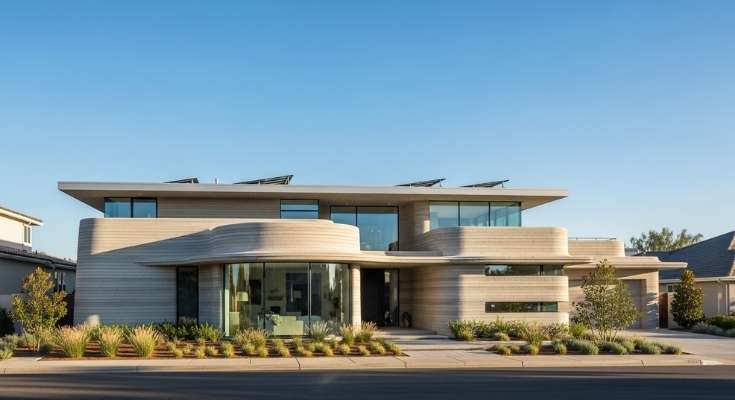
The curved walls often utilized in printed architecture aren’t just for show. Aerodynamically, curved surfaces deflect high winds far more efficiently than flat walls and sharp corners. You are essentially living inside a beautifully designed, highly insulated fortress. Furthermore, the thick concrete provides incredible thermal mass, naturally regulating indoor temperatures and significantly cutting down your monthly HVAC bills during brutal summer heatwaves.
Navigating the Permitting Maze: Actionable Advice for USA Buyers
Actually buying and financing one of these homes requires a bit of savvy maneuvering. You cannot simply point a printer at a vacant lot and press start.
The biggest hurdle right now isn’t the technology; it’s local zoning boards and stubborn municipal codes. Many local building departments across the USA are still entirely unfamiliar with this process. They operate on codes written strictly for timber and traditional masonry.
If you are serious about pursuing this route, you must become an advocate for the tech. When approaching a local zoning board or a lender, frame your project around “sustainable, high-resilience masonry.”
Securing Your Financing
Getting a mortgage for a radically new type of home can be tricky, as appraisers struggle to find “comps” (comparable sales in the area). My top advice? Work directly with lenders who specialize in new construction or green building loans.
Companies like ICON and Alquist 3D are already partnering with major developers to create entire printed subdivisions. Buying into an established printed community is currently the easiest path to secure traditional FHA or conventional financing. The infrastructure is already green-lit, the appraisers understand the baseline value, and the title companies know exactly how to close the deal.
Your Next Move
We are watching a fundamental rewrite of the American dream happening right before our eyes. The days of waiting eight months for a fragile, overpriced wooden box are slowly coming to an end.
Whether you are seeking extreme weather resilience, looking for an eco-friendly footprint, or simply desperate for a mortgage that doesn’t consume your entire paycheck, the printed home revolution demands your attention.
Start researching developers in your state, tour a prototype if you can, and talk to your mortgage broker about new-construction loan products. Are you ready to embrace the modern way of living, or will you stay stuck in the bidding wars of the past? Drop a comment below and let us know if you would live in a house built by a robot!
Frequently Asked Questions (FAQ)
How long does it take to 3D print a house?
The actual printing of the exterior and interior wall system is incredibly fast, often taking between 24 to 48 hours of total print time spread over a few days. However, you still need traditional trades to install the roof, windows, plumbing, and electrical systems, meaning a complete move-in ready timeline is usually 2 to 3 months.
Are 3D-printed homes actually safe to live in?
Absolutely. Because they are constructed using highly engineered concrete compounds, they often exceed the structural safety ratings of traditional wood-framed homes. They are highly resistant to fire, mold, pests, and extreme weather events like hurricanes and tornadoes.
Can I get a normal mortgage for a 3D-printed house in the US?
Yes, but it requires finding the right lender. As these homes become more common, mainstream banks are issuing standard 30-year fixed mortgages for them. Buying within a planned 3D-printed subdivision is the easiest way to secure standard financing without appraisal headaches.
What happens if a wall breaks or needs a repair?
The proprietary concrete is exceptionally tough, so daily wear and tear is rarely an issue. If severe damage does occur, the walls can be patched and repaired using specialized concrete bonding agents, very similar to how traditional masonry or stucco is repaired.