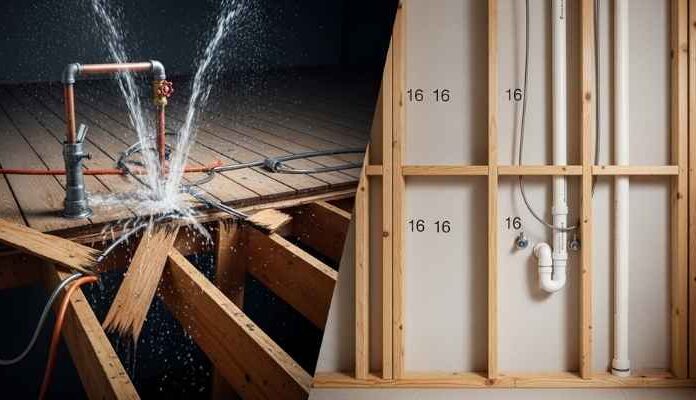
Have you ever stared down a multi-million dollar project timeline, watching your profit margins evaporate with every delayed material shipment? We have all been there. Traditional building methods are bleeding capital at an unsustainable rate. Labor shortages plague job sites from Seattle to Miami, while material costs skyrocket unpredictably.
You desperately try to keep things on track to appease stakeholders. But weather delays, human error, and archaic project management tools constantly throw wrenches into your carefully planned gears. It often feels like you are fighting a losing battle against the clock, the elements, and your own budget constraints.
What if I told you the hardhats of tomorrow are practically wearing capes? The landscape of urban development is shifting violently under our feet. Those who stubbornly cling to paper blueprints and clipboards will simply not survive the next decade of commercial development.
We are witnessing a profound, lucrative revolution. Cutting-edge construction technology is completely rewriting the rules of engagement for developers and contractors alike. From autonomous heavy machinery doing the heavy lifting to algorithms predicting your next supply chain hiccup, the sector is experiencing a massive, high-tech renaissance.
This is not some distant, utopian sci-fi fantasy. These paradigm-shifting tools are deploying right now on active job sites across the United States. Builders who pivot early to embrace innovative construction techniques are drastically slashing their overhead, doubling their safety metrics, and delivering projects months ahead of schedule.
Take a recent commercial high-rise development I consulted on in downtown Austin. The developers were hemorrhaging roughly $25,000 a day in holding costs due to severe framing delays and a localized skilled labor drought. They thought the entire investment was entirely doomed to fail.
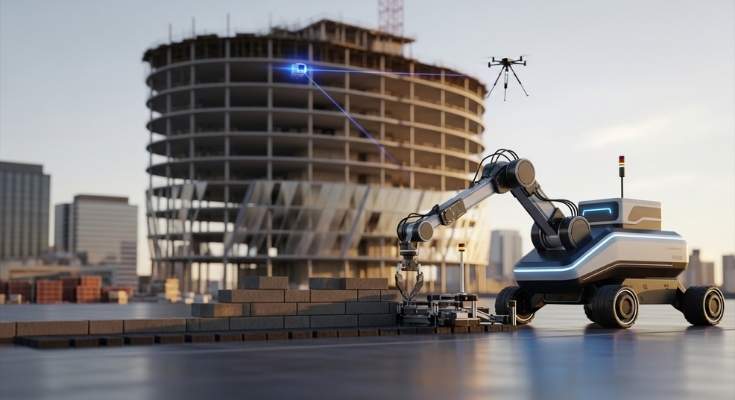
We aggressively introduced a suite of automated site-monitoring drones and robotic layout assistants. Within three short weeks, the framing timeline compressed by an astonishing 40%. This instantly stopped the financial bleed and put the developers firmly back in the black.
That is the raw, undeniable power of technological modernization. If you want to dominate the next era of real estate development and secure those high-yield returns, you must adapt immediately. Let us break down the exact technologies fundamentally shifting how we build the modern world.
The Rise of the Machine: Construction Robots and Automated Building
The days of relying solely on human muscle to move mountains of earth and lay thousands of bricks are fading fast. We are entering the era of construction robots, where tireless machines handle the most dangerous and repetitive tasks on site. These mechanical marvels never need a coffee break, never pull a hamstring, and consistently operate with millimeter-perfect precision.
Imagine a specialized rover navigating a rugged terrain in Texas, autonomously laying bricks perfectly aligned to a digital blueprint. We are seeing these systems drastically outpace traditional masonry crews, sometimes completing the shell of a residential home in a mere 48 hours. This hyper-efficiency directly translates to massive cost savings for the developer.
But it goes far beyond simple bricklaying. Semi-autonomous bulldozers and excavators are now actively grading land based on complex GPS and 3D terrain models. This level of automated building ensures that foundational groundwork is completed flawlessly the very first time. Rework becomes a thing of the past.
Think about the staggering liability costs associated with on-site injuries and OSHA violations. By deploying robots for hazardous tasks like high-rise welding or heavy lifting in unstable trenches, we dramatically mitigate human risk. Insurance premiums drop, worker compensation claims vanish, and the site remains aggressively productive.
I recently spoke with a commercial contractor in Chicago who integrated rebar-tying robots into a major bridge project. Initially, his veteran crew was fiercely skeptical of the machines. Within a month, the crew realized the robots were saving their backs while allowing them to focus on complex, high-level structural problem-solving.
This is the beautiful synergy of modern automation. We are not necessarily replacing the human workforce; we are powerfully augmenting it. The companies that master fleet management of these robotic assets will undeniably bid lower and build faster than anyone else in their local market.
Living Structures: The Dawn of Smart Buildings and IoT Integration
We no longer just build static shelters of steel and glass; we are engineering living, breathing ecosystems. The integration of the Internet of Things (IoT) has birthed the era of smart buildings. These structures actively monitor their own health, optimize their energy consumption, and dynamically respond to the people inside them.
During the foundational pouring of modern skyscrapers, contractors are now embedding micro-sensors directly into the wet concrete. These tiny devices continuously broadcast critical data regarding the curing process, structural integrity, and long-term stress loads. If a microscopic fracture begins to form years after completion, the building literally alerts the management team before it becomes a catastrophic failure.
This preventative capability is a total game-changer for commercial real estate valuation. When you can definitively prove to a buyer that a high-rise has a perfect, digitally verified structural health record, the asset commands a premium price. Smart technology directly inflates your exit multiple.
Energy efficiency is another massive financial lever pulled by IoT integration. Intelligent HVAC systems utilize machine learning to analyze weather patterns and occupancy rates in real-time. They automatically adjust temperatures room-by-room, slashing utility overhead by up to 30% annually for property managers.
Consider a sprawling, multi-tenant corporate campus in Silicon Valley. Through a centralized dashboard, the facility manager can instantly identify a failing water pump on the fourth floor or a power surge in the server room. Maintenance becomes strictly predictive rather than chaotic and reactive.
Ultimately, tenants are actively seeking out—and paying top dollar for—leases in these advanced, hyper-connected environments. Integrating smart building protocols during the initial design phase is no longer an optional luxury. It is a mandatory requirement for securing high-paying, long-term commercial tenants in today’s competitive market.
Printing Neighborhoods: 3D Printing and Innovative Construction Materials
Throw out your preconceived notions of how a house goes from foundation to roof. 3D printing is tearing up the traditional blueprints and introducing a breathtaking level of innovative construction. Massive gantry printers are now extruding specially formulated concrete mixtures layer by layer, literally printing entire structures from the ground up.
This technology allows architects to break free from the constraints of right angles and standard timber framing. Want a home with sweeping, aerodynamic curves that perfectly deflect hurricane-force winds? A 3D printer can execute that complex geometric design just as easily as a simple square box. The aesthetic possibilities are incredibly exciting.
Beyond the wild architectural freedom, the speed and waste reduction are financially staggering. Traditional framing generates dumpsters full of wasted wood, drywall, and siding. 3D printing is an additive process; it uses exactly the amount of material required and absolutely nothing more.
We are also witnessing a revolution in the very atomic makeup of the materials we use. Engineers have successfully developed self-healing concrete. By embedding specialized dormant bacteria into the mix, the concrete can organically seal its own cracks when exposed to water, vastly extending the lifespan of infrastructure.
Imagine pitching a municipal bridge project that technically maintains itself for the next fifty years. You immediately win the bid. Furthermore, innovations like translucent wood and advanced graphene-infused composites are drastically lowering the carbon footprint of new developments.
A startup I follow recently printed a fully permitted, 1,200-square-foot residential home in less than 24 hours of total print time. As housing shortages continue to crush American cities, this scalable, rapid-deployment technology is the ultimate silver bullet. It is cheap, it is incredibly fast, and it is entirely disruptive.
Eyes in the Sky: Drones, AI, and Next-Level Site Surveying
Before a single shovel hits the dirt, you need absolute clarity on the typography and constraints of your land. In the past, site surveying meant weeks of men walking the perimeter with theodolites and marking tape. Today, we simply launch a fleet of high-definition, LiDAR-equipped drones.
These aerial units sweep a hundred-acre parcel in a matter of hours, generating a hyper-accurate 3D topographical map. This data is instantly fed into an AI-driven project management platform. The software instantly highlights potential drainage issues, elevation conflicts, and optimal access routes for heavy machinery.
The analytical power of Artificial Intelligence is the invisible brain behind modern job sites. AI algorithms ingest decades of historical construction data, current weather forecasts, and global supply chain metrics. It then provides project managers with highly accurate predictive schedules, flagging potential delays weeks before they actually happen.
If a specific steel manufacturer in Ohio experiences a sudden shutdown, your AI platform immediately identifies the bottleneck. It then automatically suggests three alternative suppliers to keep your critical path completely intact. You are no longer reacting blindly to crises; you are outmaneuvering them strategically.
Drones also provide unmatched daily progress tracking and volumetric measurements. A project executive sitting in a boardroom in New York can pull up a 3D scan of a job site in Nevada, actively measuring the exact volume of dirt excavated that morning. Transparency and accountability reach unprecedented levels.
This lethal combination of aerial hardware and predictive software eliminates the dreaded “blind spots” in project management. When you know exactly what is happening on your site down to the inch and the minute, your profit margins stop leaking. You execute with military precision.
Building the Future and Securing Your Margins
The construction industry has historically been notoriously slow to adapt, often clinging to the old ways simply out of habit. However, the financial pressures of the modern real estate market have forced a magnificent evolution. We have crossed the Rubicon, and the technological genie is officially out of the bottle.
From autonomous bricklaying machines to self-healing concrete, these advancements are stripping the friction out of development. The barriers to entry for utilizing this tech are dropping rapidly, making it accessible not just to mega-corporations, but to aggressive mid-market developers as well. The competitive advantage heavily favors early adopters.
If you are an investor, developer, or contractor operating in the US market, ignorance is your greatest liability. You need to actively audit your current operational pipeline and identify where software, robotics, or advanced materials can immediately replace archaic manual processes. The ROI on these integrations is frankly astounding.
Start small if you must. Implement drone surveying on your next plot, or mandate that your general contractors utilize AI-driven scheduling software. Once you witness the compression of timelines and the reduction of bloated overhead, you will never look back at traditional methods again.
The skyline of tomorrow belongs exclusively to the innovators. For more deep-dive strategies on financing these massive technological upgrades and securing capital for your next commercial project, be sure to explore the resources at loanforphp.com. We provide the financial blueprints you need to build bigger, smarter, and faster.
Frequently Asked Questions (FAQs)
Will construction robots completely replace human workers on the job site?
Absolutely not. While construction robots excel at dangerous, repetitive, and heavy-lifting tasks, they lack human intuition and complex problem-solving abilities. The future job site is highly collaborative, where skilled tradesmen pilot, manage, and maintain automated systems to massively boost their own daily productivity.
How exactly do smart buildings generate a return on investment (ROI)?
Smart buildings leverage integrated IoT sensors and AI to drastically slash operational costs. By autonomously optimizing HVAC usage, predicting costly equipment failures before they occur, and reducing energy waste, property owners see a massive drop in utility and maintenance overhead. This immediately increases the net operating income (NOI) of the asset.
Is 3D printing and automated building actually viable for commercial real estate?
Yes, and it is scaling rapidly. While initially restricted to small residential projects, massive modular 3D printers and automated building techniques are now being utilized for multi-family complexes, retail shells, and military barracks. The technology significantly mitigates supply chain delays and labor shortages, making it highly attractive for commercial developers.
What is the easiest piece of construction technology to implement immediately?
For instant ROI, drone surveying and AI-based project management software are the easiest entry points. They require almost zero physical changes to your active job site but provide immediate, hyper-accurate data regarding site progress, volumetric measurements, and predictive scheduling, allowing you to catch costly errors early.